My column is usually about travel, places I visit or helpful hints to make travel easier. I have been traveling and recently returned from two weeks in Portugal and two weeks in New Jersey.
I realize New Jersey is not one of my usual travel destinations, however, this trip was for a most auspicious event--I am now a grandmother. Sarah Bina Tzall was born on Sunday, October 5tth at 7:30 a.m. in Passaic Park, New Jersey. The proud parents, Heather and Rob Tzall are tired, but doing well.
 I decided that being a grandmother definitely gives me bragging rights, so this column is dedicated to Sarah Bina. Sarah is my first grandchild and is named after my mother, who died in 2006. Among Ashkenazi Jews, (Jews from Germany and Eastern Europe,) it is customary to name children after a deceased relative. This a way of honoring that person and keeping their memory alive. Naming a child is one of the most important decisions new parents make. The Talmud (Berachot 7b) teaches that a Hebrew name has an influence on its bearer. Hence, it is extremely important to name your children after individuals with positive character traits who have led fortunate lives and have helped bring goodness to the world. My mother died at age 89 and was a loving wife, mother and grandmother. Bina, her middle name, is a Hebrew name that means understanding, intelligence and wisdom.
Sarah was actually born a week early, which I appreciated since I was flying into New Jersey on October 6th on my way to Portugal. I got to see Sarah when she was less than 24 hours old and then spent two weeks with her on my way home. Sarah was only 6 lbs,1 oz. at birth and 21 inches long; tiny in comparison to her mother who was over 8 lbs. at birth.
 This was my first trip to Passaic Park since Heather and Rob moved (from Israel) this past June. Only 30 minutes from downtown Manhattan through the Lincoln Tunnel (20 minutes by train or express bus, ) Passaic Park is an old town with beautiful, large, wood frame houses, parks, and shopping centers nearby. It is also a town in transition with a growing, young observant community. There are several synagogues, religious schools, a kosher market and a kosher bakery within a half-mile of their home. It is a common sight to see women pushing strollers to and from the main shopping area or out and about on “Shabbat” (Sabbat begins on Friday evening at sundown and is over on Saturday evening at sundown.) There are even three kosher restaurants in Passaic--a Chinese restaurant, a deli and a pizza parlor. Traffic in Passaic is light since most residents commute into Manhattan by bus or train. The biggest traffic jam I saw was the abundance of strollers parked outside the synagogue on Simchat Torah (The Joy of the Torah--the celebration of the completion of and the beginning of the “Reading of the Torah.” It was definitely a joyous occasion and entire families were celebrating at the synagogue.)
 The very best part of my trip was sitting and rocking this new bundle of joy. Heather’s sister, Erin (now known as Auntie Erin,) was able to come from Texas for a long weekend and joined us in Passaic for a family reunion. I don’t think Sarah was ever put down the entire weekend!!!
 I’m now part of a select group of very important people--Grandmothers. I think it’s the best “club” ever!!!!
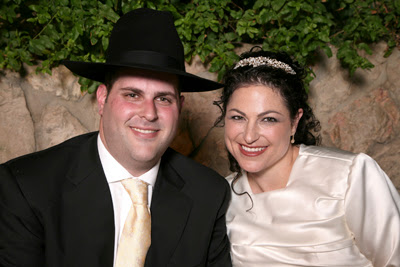
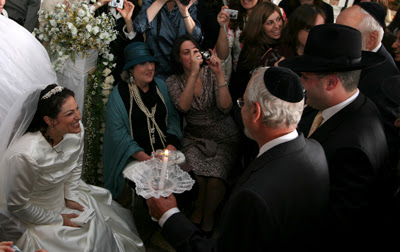
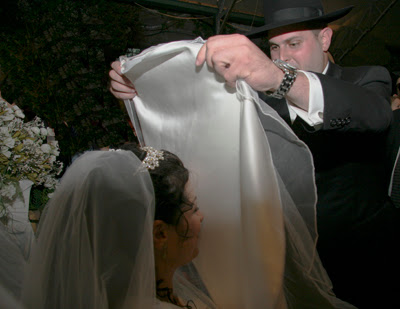
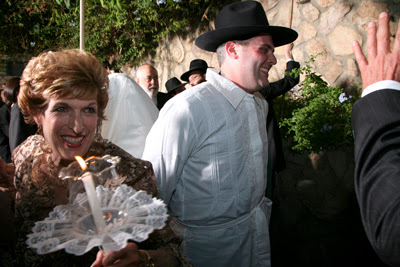
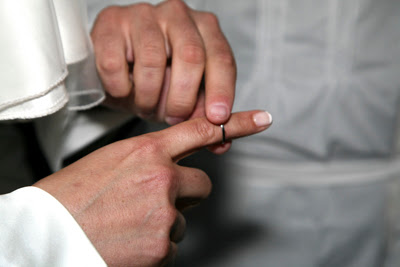
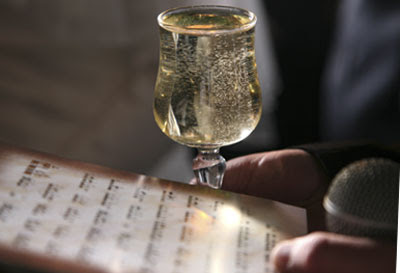
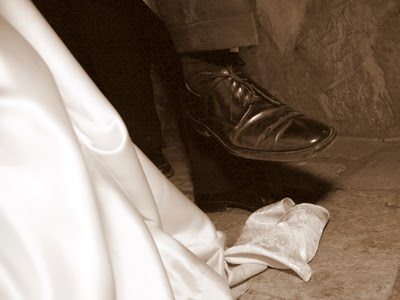
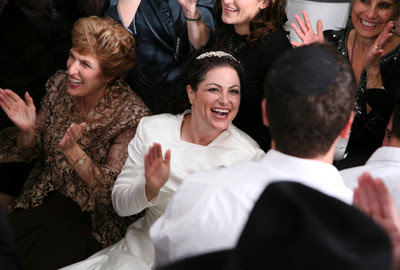
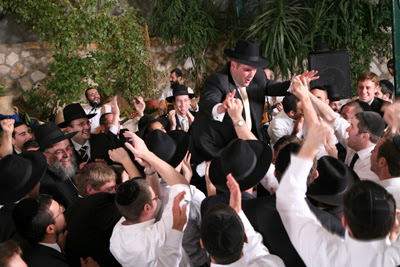
Would you like to see their beautiful orthodox wedding? Click this link: Heather and Rob's Wedding.
Join me next week in Lisbon, Portugal for a few days of sightseeing on our way to Porto.